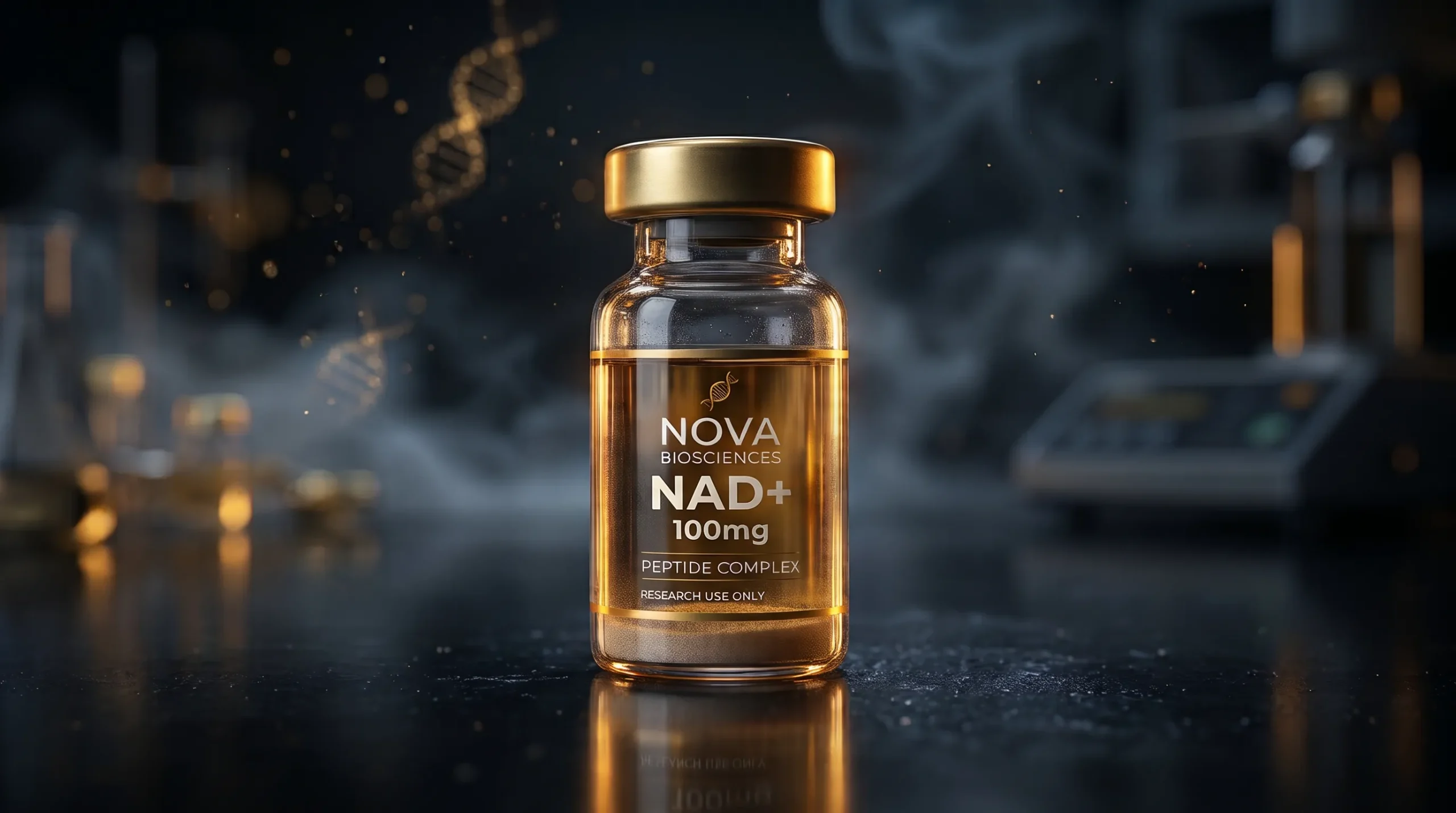
NAD+ — nicotinamide adenine dinucleotide — is a coenzyme found in every living cell, and it has become one of the most studied molecules in cellular and ageing research. It plays a central role in energy metabolism, DNA repair and cell signalling, which is why laboratories around the world use it as a model compound. Nova BioSciences supplies NAD+ (100mg) for laboratory research, and this article offers an educational overview of what researchers study and why. It is about science, not about any use outside the laboratory.
What Is NAD+?
NAD+ is a coenzyme that helps enzymes transfer electrons during metabolic reactions. It exists in two forms, NAD+ and NADH, and cells constantly convert one into the other as they produce energy. NAD+ is also used by a family of enzymes called sirtuins, which are involved in gene expression, stress responses and the maintenance of cellular health, and by enzymes that repair damaged DNA. Because it sits at the centre of so many processes, researchers describe NAD+ as a hub molecule: changes in its levels can affect many parts of a cell at once.
Why Laboratories Study NAD+
One reason NAD+ attracts so much attention is that its levels appear to fall with age in many tissues, at least in animal models. Researchers study whether that decline is a cause or a consequence of ageing, and how it relates to mitochondrial function, the part of the cell that generates energy. Another reason is its link to metabolism. Studies in cell culture and in animals examine how NAD+ levels respond to diet, exercise, sleep and metabolic stress, and how those changes affect the activity of sirtuins and other NAD+-dependent enzymes. A third area is DNA repair, where researchers look at how cells use NAD+ when they respond to damage from radiation, chemicals or normal wear.
NAD+ in Cell and Metabolic Research
In practical laboratory work, NAD+ is used as a reference compound and as a reagent in assays that measure enzyme activity, mitochondrial respiration and cellular energy status. Researchers may compare NAD+ levels between young and old cells, between healthy and diseased tissue models, or before and after an experimental treatment. They also study the precursors that cells use to make NAD+, such as nicotinamide, nicotinamide riboside and nicotinamide mononucleotide, to understand the pathways that control its supply. Each of these questions depends on accurate, well-documented material: the lot number, the storage conditions and the handling history all matter for reproducibility.
What the Evidence Shows — and What It Does Not
It is important to be clear about the limits of the evidence. Most of what is known about NAD+ comes from laboratory and animal studies, and the results do not always agree. Some studies report clear links between NAD+ levels and markers of cellular health, while others find smaller or more variable effects. Human studies are still limited, and they measure different outcomes in different ways. For laboratory teams, that means the field is active and promising, but also unsettled — a good reason to design experiments carefully, to use appropriate controls and to report methods in full.
Handling and Storage in the Lab
Like other analytical-grade compounds, NAD+ is handled under standard laboratory conditions: stored as directed by the supplier, protected from moisture, light and heat, and used within the period covered by the lot documentation. Researchers reconstitute it only for the experiment at hand, label it as a research chemical, and keep it separate from any other material in the laboratory. Clear record-keeping — lot number, solvent, concentration and date — lets other researchers repeat the work and compare results.
For laboratory research only. Not for human consumption.